Manthan 2026 at Parul University: When Online Students Met the Campus, and a Debate on Humanities & AI
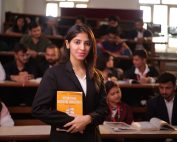
For many of them, it was the first time they had ever set foot on the campus of the university they attend. At Manthan 2026, Parul University’s online learners, among them a retired banker, a serving Army officer, a doctor, and a South African diplomat, came together in person for a day of dialogue on education, technology, and what it means to stay human in the age of AI.
A Session More Than a Lecture
Online education can feel like a set of names in a chat window. On 22 August 2026, those names became people. The Center for Distance and Online Education (CDOE) at Parul University organised Manthan 2026, an interactive gathering at the Lakshya 2047 building that invited the university’s online learners, many visiting the campus for the very first time, into a day of genuine dialogue. Its tagline captured the spirit: “Vichar, Samvad, Chintan”, Idea, Dialogue, and Reflection.
A Panel Built for Debate, Not Lecture
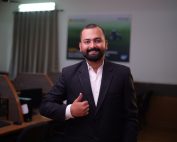
The organisers deliberately avoided one-way lectures. Instead, they convened a panel to spark real discussion on education, technology, and the modern world. It brought together Dr. Vishal Bhadani, Vice-Provost for Rural Innovation at Lok Bharati University, and Ms. Devarshee Pandya, Digital Lead at NASSCOM, Gandhinagar, for a philosophical-versus-pragmatic exchange, moderated by Dr. Mihir Kumar Dave, Head of the Online Liberal Arts programme at CDOE. Dr. Kunjal Sinha, Pro Vice-Chancellor of Parul University, and Dr. Hetal Thakur Bhatt, Director of the CDOE, added the institution’s perspective.
Breaking the Ice
The morning opened with a warm ice-breaking session, a round of “Two Truths and a Lie” that gently turned a room of strangers, who had until then known each other only as online classmates, into a comfortable community. It set exactly the tone the day needed: relaxed, curious, and human.
Why Perspective Matters More Than Content
In her address, Dr. Kunjal Sinha challenged a common assumption about education. Simply imparting knowledge, she argued, is no longer enough; knowledge is raw data, and the real task is shaping the perspective students carry out of the classroom. Looking at a hall that held retired sixty-year-olds beside students yet to finish their first degree, she noted how differently generations now see media, technology, and the world, and warned that universities which fail to understand younger learners risk building systems that do not truly serve them. She urged the gathering to use Manthan to find common ground across ages.
The Great Debate: Humanities in the Age of AI
The heart of the morning was a spirited debate on how to stay relevant, and human, as technology accelerates. Dr. Bhadani made a philosophical case for the humanities as a necessary “pause” in a world obsessed with speed, arguing that while science asks whether machines can replace people, the humanities ask whether they should. Ms. Pandya offered a pragmatic counter: that individuals do have real choices about their technology use, and that understanding the attention economy is the first step to using it wisely. The full exchange is explored in our companion piece on why the humanities still matter in the age of AI.
The Real Stars: The Students
If the experts sparked the debate, the students gave the day its heart. When the floor opened, the online learners who had travelled from across India, and the world, shared journeys that were, as Dr. Mihir Dave put it, like walking case studies.
Pratima Pandey: A Soldier Studying the Mind
A serving Army officer posted in Baroda, Pratima Pandey enrolled in the online M.A. in Clinical Psychology to better understand the personnel and families she works with, a field she called military psychology. Unable to attend a traditional college, she found the flexibility she needed in the online format, praising the Learning Management System’s mock tests, e-books, and recorded lectures that let her study late at night around her duties. She chose to complete her mandatory 120-hour internship in person, at a government mental hospital, an experience that, she said, turned textbook knowledge into real clinical confidence. She closed, fittingly, with a proud “Jai Hind.”
Mukesh Pandya: A Banker’s Second Innings
After 34 years with the State Bank of India, Mukesh Pandya chose a radically different retirement. Rather than the usual consultancy route, he enrolled in the online M.A. in English Literature (English Language Teaching) to move into academic teaching, a decision he called life-changing. He praised the programme’s consistency and delivery, noting his surprise that such quality came at so accessible a fee. “In India, everything is well planned on paper, but execution often fails,” he observed. “This was not just well planned, it was exceptionally well delivered.”
Dr. Veena Sarathe: From Medicine to Literature
A practising medical professional, Dr. Veena Sarathe returned to academics to fulfil a long-held love of language, enrolling in the online M.A. in English Literature. Her deeper motivation was practical and moving: working in a remote tribal area, she meets people who have passed Class 10 yet cannot write their own names in English, and she wanted the pedagogical skills to teach the language, not just speak it. She was candid that online learning has real trade-offs, but for professionals at a busy stage of life, she called it a genuine lifeline, one she used by listening to lectures between patients in her clinic.
Mashudubele Mamabolo: A Diplomat’s Global View
Perhaps the most striking voice was Mr. Mashudubele Mamabolo, a South African diplomat who enrolled in an online programme at Parul University and applied its coursework directly to his work, developing a public-diplomacy strategy for his embassy. Drawing on prior online study in the UK, he offered a pointed comparison, telling Indian students they should value the rigour of their education, and shared that, in his experience, an Indian degree was remarkably affordable compared with study elsewhere. His belief in the university runs deep: he said he had encouraged his own son to study on campus, and he urged India to keep teaching the humanities rather than reducing education to technology alone. (His specific figures reflect his personal account.)
Listening, and Acting
A recurring theme in the students’ reflections was that the CDOE listens. Several described a feedback loop in which suggestions after each semester were not just collected but acted upon, a responsiveness that, for adult learners balancing careers and families, made all the difference. Together, their stories made a quiet but powerful case: that good online education can open a university’s doors to people a traditional classroom never could.
A Comma, Not a Full Stop
Closing the day, Dr. Mihir Dave reflected that choosing to learn something new later in life means willingly becoming a beginner again, and that embracing that vulnerability, rather than avoiding it, is the real secret to staying young. In her vote of thanks, Dr. Nisha Mehta drew on the myth of the Samudra Manthan, the churning of the ocean, noting that the day’s churning of ideas, like the myth, was turbulent but produced something valuable: a drop of wisdom for everyone to carry home. Manthan 2026, the organisers promised, was not a full stop but a comma, with an invitation to return in 2027. Don’t let your learning stop, join the course with online degree through PU Online.
Frequently Asked Questions
What was Manthan 2026 at Parul University?
The panel featured Dr. Vishal Bhadani (Lok Bharati University) and Ms. Devarshee Pandya (NASSCOM), with Dr. Mihir Kumar Dave moderating, and addresses by Dr. Kunjal Sinha (Pro Vice-Chancellor) and Dr. Hetal Thakur Bhatt (Director, CDOE). The students included a serving Army officer, a retired banker, a practising doctor, and a South African diplomat, among online learners from across India and abroad.
Who attended Manthan 2026?
The panel featured Dr. Vishal Bhadani (Lok Bharati University) and Ms. Devarshee Pandya (NASSCOM), with Dr. Mihir Kumar Dave moderating, and addresses by Dr. Kunjal Sinha (Pro Vice-Chancellor) and Dr. Hetal Thakur Bhatt (Director, CDOE). The students included a serving Army officer, a retired banker, a practising doctor, and a South African diplomat, among online learners from across India and abroad.
Who can study online at Parul University?
Parul University’s online programmes are designed for working professionals, adult learners, and international students who cannot attend a traditional campus. As Manthan 2026 showed, its online learners include serving officers, retired professionals returning to study, doctors, and diplomats, using flexible, recorded, LMS-based learning to study around their careers and families.